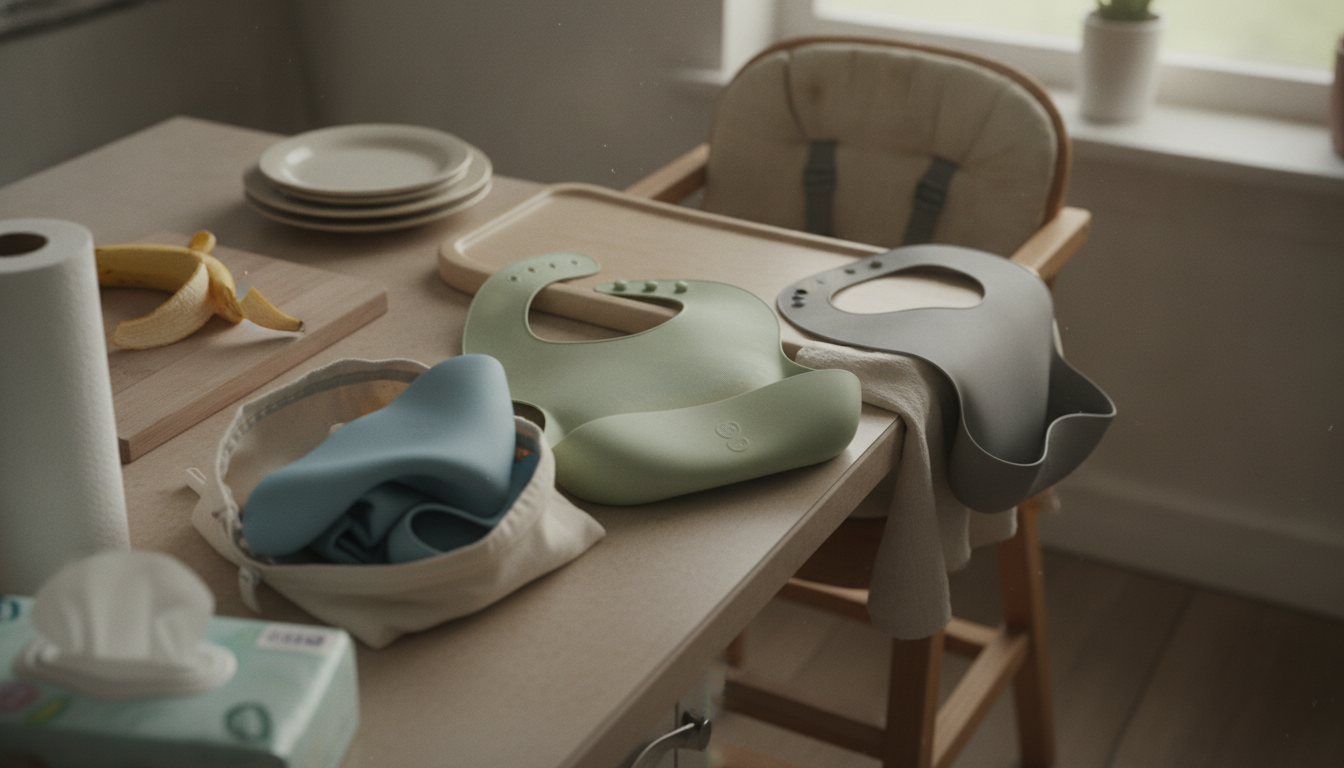
Silicone bibs are popular for their wipe-clean convenience and built-in food catchers, but they’re not perfect for every baby or routine. The main drawbacks tend to show up around comfort, fit, odor retention, and day-to-day practicality.
Compared with cloth, silicone can feel heavier and less “breathable” against the neck and chest. Some babies tug at the bib, fuss, or develop mild redness if the neck is fastened too snugly or if moisture gets trapped underneath during longer meals.
Even with adjustable snaps, the neck opening may be either too tight (leaving marks) or too loose (letting food slip down). A stiff bib that doesn’t drape can also sit awkwardly when baby is leaning forward, strapped into a high chair, or wearing bulkier clothing.
Silicone can absorb strong odors over time, especially after foods like garlic, onion, tomato sauce, or curry. Some bibs also discolor, and that “clean but still smells” problem can be frustrating unless the bib is thoroughly washed and fully dried.
Silicone bibs don’t fold as flat as fabric bibs, and the pocket can make them bulky in a diaper bag. If packed while damp, they can trap moisture and develop lingering odor faster.
While many options are marketed as food-grade and BPA-free, individual babies can still be sensitive to friction, trapped drool, or the bib’s edges. Cleaning residues (like scented soap) left on the bib can also irritate delicate skin.
For a deeper look at choosing an adjustable, waterproof, BPA-free option and how to use it well, visit this silicone baby bib guide.
Wash with unscented dish soap, rinse thoroughly, and let it air-dry completely. For stubborn odors, a short soak in warm water with baking soda can help before rinsing again.



Leave a comment