
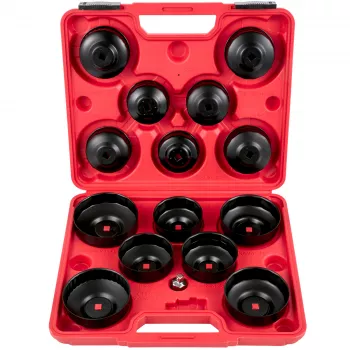
The socket size you need to remove an oil filter cap depends on the exact vehicle and the style of cap. Many cartridge-style oil filter housings use a large, shallow “cap socket” in the 27mm–36mm range, with 32mm and 36mm being especially common. Some Toyota and Lexus applications often use 64mm or 65mm, measured in millimeters across the cap socket’s flats (and sometimes specified by the number of flutes). Because there isn’t one universal size, the safest move is to match the tool to your housing rather than guessing.
Start by checking the owner’s manual, factory service info, or a reputable fit guide for your year/make/model/engine. If you already have the cap accessible, measure it: use calipers across the flats (for hex-style caps) or measure the outer diameter and count flutes (for fluted caps). A test-fit at the parts counter can also prevent buying the wrong socket—your cap socket should slide on fully with minimal wobble.
Some oil filter housings sit tight to subframes, skid plates, or exhaust components. A low-profile oil filter cap socket can give you the clearance needed to keep the socket seated and avoid rounding plastic caps. For a deeper fit-and-size walkthrough, use this guide: low-profile oil filter cap socket set fit guide.
Use a 3/8-inch or 1/2-inch drive ratchet that fits the socket’s drive size, keep steady pressure straight in-line, and avoid impact tools on plastic housings. If the cap feels stuck, confirm the socket is fully seated and try a longer handle for controlled leverage. Replace the O-ring and lightly oil it before reinstalling, and tighten to the specified torque.
It’s possible on some hex-style caps, but it’s more likely to slip and round the cap—especially if the cap is plastic. A properly sized cap socket is the safer, more consistent option.






Leave a comment