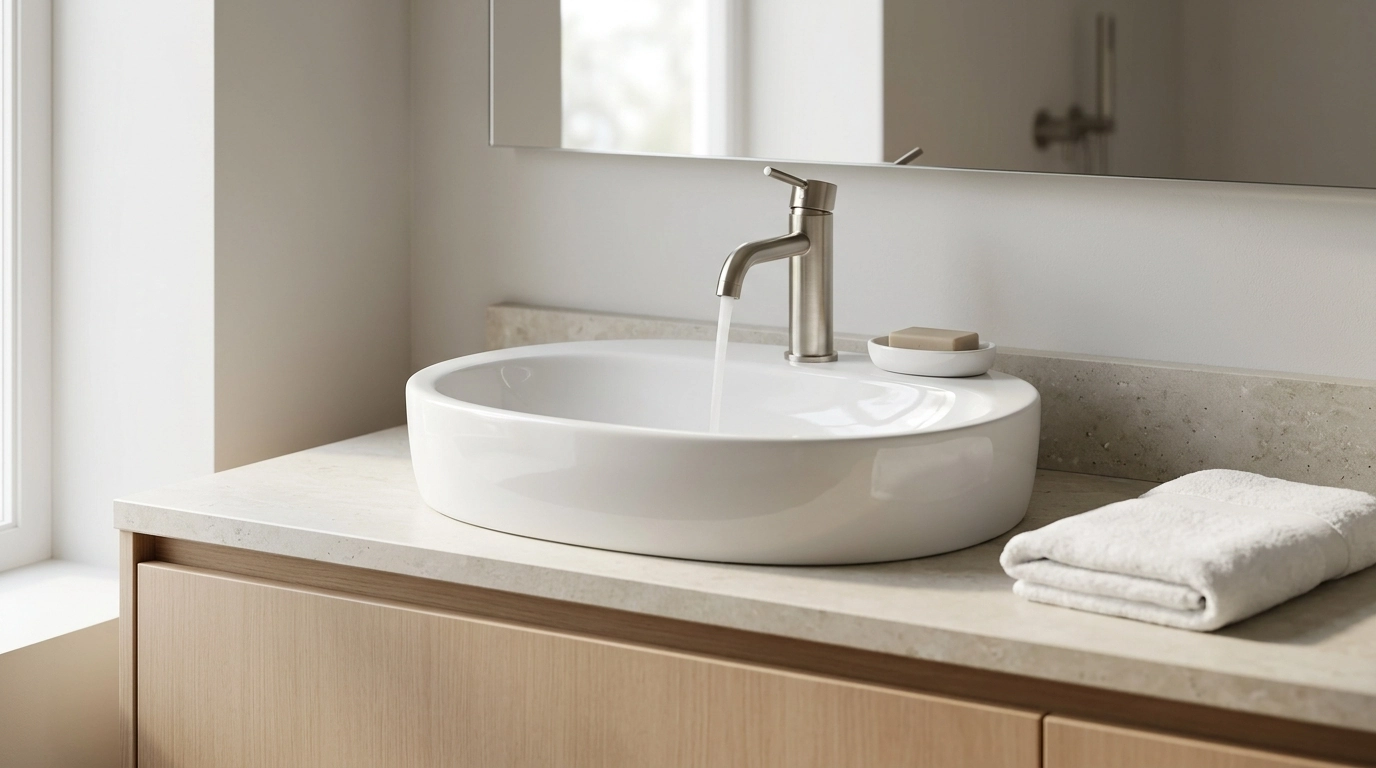
Ceramic and quartz can both be great choices for a bathroom vanity, but they shine in different ways. Ceramic (often used for sinks and sometimes for vanity tops) is a classic, budget-friendly surface that handles everyday water exposure well and is easy to wipe clean. Quartz (an engineered stone commonly used for vanity countertops) stands out for its premium look, strong resistance to staining, and wide range of colors and patterns.
Choose ceramic if you want a clean, timeless look with straightforward maintenance. It’s non-porous when properly glazed, so it resists water and common bathroom messes. Ceramic is also a practical choice when you’re pairing it with an integrated or countertop sink and want a cohesive, bright finish.
Ceramic can chip if hit by a heavy object (like a dropped tool or perfume bottle), so it’s a smart fit for bathrooms where gentle daily use is the norm.
Quartz is often the better option if you’re prioritizing a high-end countertop that stays looking “new” with minimal fuss. It resists staining from cosmetics and toiletries better than many natural stones, and it’s less likely to etch from mild household products. Quartz is also ideal if you want a specific design—marble-look veining, solid modern tones, or a coordinated palette across a larger bathroom.
One caution: avoid placing very hot styling tools directly on quartz and use gentle, non-abrasive cleaners to keep the finish consistent.
If the vanity top is your main visual centerpiece, quartz usually delivers the biggest impact. If the sink is the focal point—or you prefer a crisp, glazed surface that’s simple and cost-effective—ceramic is hard to beat. For guidance on ceramic sink selection and care, see this ceramic oval countertop bathroom sink buying and care guide.
Use a soft cloth or sponge with mild dish soap or a non-abrasive cleaner, then rinse well and dry. Avoid harsh abrasives and metal scouring pads that can dull the glaze over time.






Leave a comment