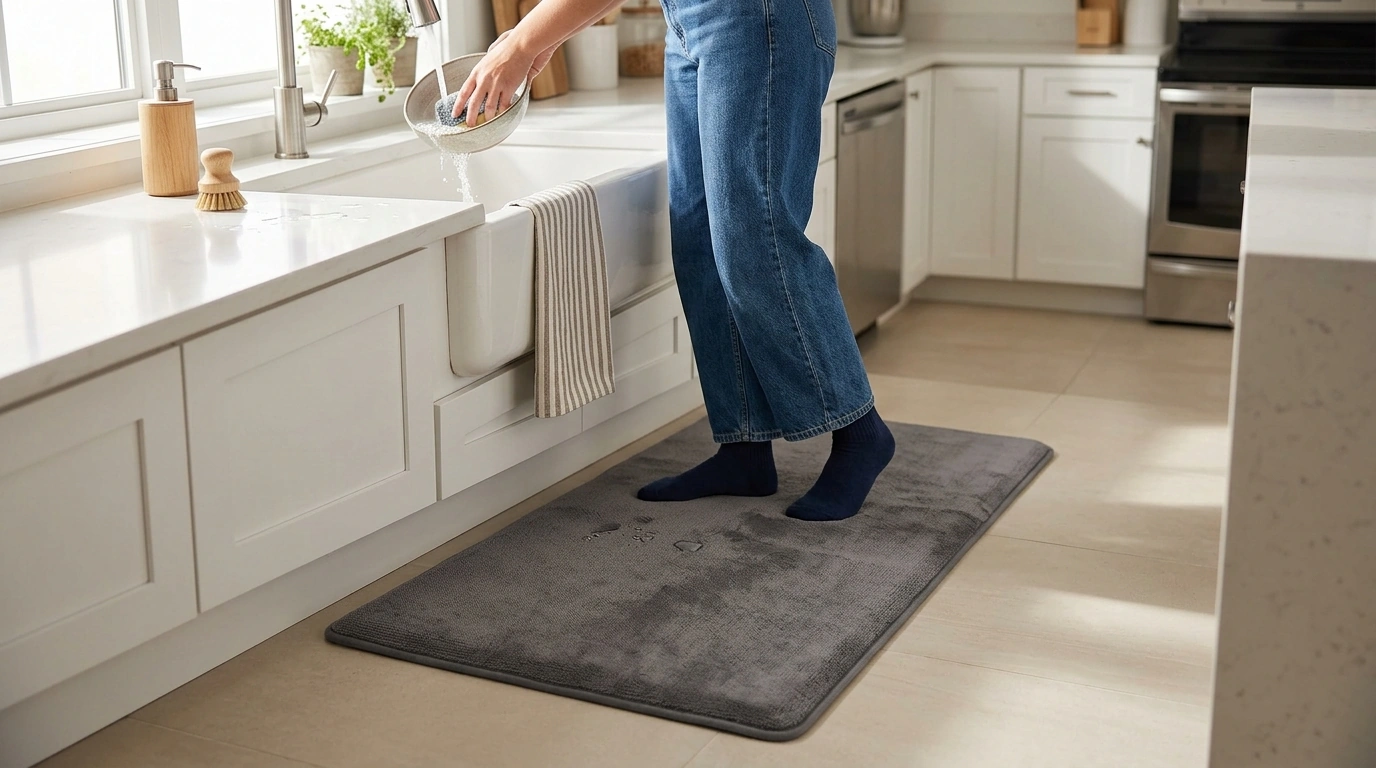
A well-placed kitchen mat can make long stretches at the sink or stove noticeably easier on feet, knees, and lower back—while also helping manage splashes and tracking. This guide covers what to look for in a soft memory foam kitchen floor mat with a non-slip base and absorbent flannel top, how to use it safely, and how to keep it looking fresh.
Kitchens are “stand and repeat” spaces: rinse, chop, stir, plate, and clean—often on hard flooring that doesn’t give at all. A soft memory foam kitchen floor mat adds a buffer between your body and the floor, which can make routine tasks feel less taxing over time.
If standing comfort is a priority, it also helps to pair a cushioned mat with mindful posture—neutral spine, shoulders relaxed, and weight distributed rather than locked into one hip. For practical posture basics related to back comfort, see guidance from Cleveland Clinic.
Not all kitchen mats feel the same underfoot or behave the same on smooth flooring. The most useful options balance comfort, stability, and easy upkeep—so the mat stays in place and stays pleasant to stand on.
| Feature | What it helps with | What to watch for |
|---|---|---|
| Memory foam cushioning | Comfort during long standing; reduced foot fatigue | Too-soft foam can feel unstable on quick pivots |
| Absorbent flannel top | Handles minor splashes; comfortable texture | Needs regular drying/cleaning to avoid lingering odors |
| Non-slip backing | Helps prevent sliding on smooth floors | May slip if dust/grease builds up under the mat |
| Low-profile edges | Helps reduce tripping | Edges can curl if heat/drying is too aggressive |
| Easy-care construction | Simplifies routine cleaning | Harsh cleaners can damage backing over time |
A memory foam mat is most satisfying where you stand the longest. Instead of covering a huge area, many households get better results by placing one mat in the primary “workstation” and moving it only when needed.
For busy households, consider placing the mat where you naturally pause (like at the sink) rather than in the main walking lane, which reduces corner wear and helps the mat lie flatter longer.
Non-slip backing works best when it can fully contact the floor—without dust, grease, or moisture acting like a barrier. A few habits make a noticeable difference in grip and longevity.
For general laundering and fabric-care best practices (especially detergent use and heat considerations), the American Cleaning Institute is a helpful reference.
If you’re ready to add cushion where you stand most, the Soft Memory Foam Kitchen Floor Mat – Non-Slip, Absorbent Flannel Rug is an everyday, budget-friendly option for sink, counter, or island zones. For longer standing sessions, supportive footwear can also help; for example, Dr. Martens Women’s Beige Slip-On Shoes are an in-stock slip-on option to consider for quick on-and-off comfort around the house.
| Product | Price | Availability |
|---|---|---|
| Soft Memory Foam Kitchen Floor Mat – Non-Slip, Absorbent Flannel Rug | $14.97 USD | In stock |
Most non-slip backings are designed to be floor-safe, but results depend on the finish and conditions. Keep the floor clean and fully dry, avoid harsh chemicals that may interact with finishes, and lift/air the mat periodically—especially on sealed wood or vinyl.
Vacuum and shake it out often, spot-clean spills quickly, and make sure it dries fully after any dampness. If the care label allows, occasional gentle washing and low-heat drying (or air-drying) helps prevent odors from building up.
Start with the sink and primary prep area, where standing time is highest. Keep it away from direct heat sources and oven vents, and place it where it can lie flat without constant tight turns that can stress the edges.






Leave a comment