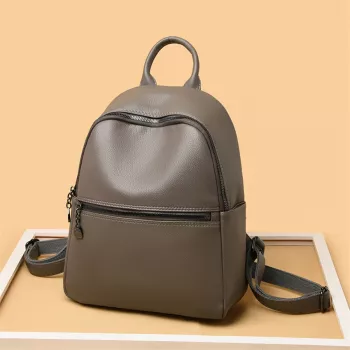
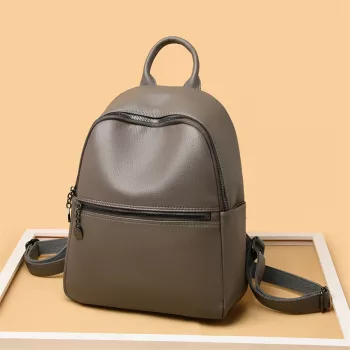
A soft leather backpack can cover busy days that move from commute to campus to weekend plans—without feeling bulky or stiff. This large casual backpack is designed for everyday carry, with a relaxed silhouette, room for essentials, and a softer feel that suits both travel and school routines. Compared with rigid, boxy bags, a softer build tends to move with you, sit closer to the body, and feel less “in the way” when you’re weaving through crowded sidewalks or hopping on public transit.
If your schedule shifts from laptop-and-charger mornings to hands-free errands in the afternoon, a large soft backpack is a practical middle ground: roomy enough for daily needs, but casual enough to wear with sneakers, denim, and light layers.
Comfort comes down to how the material drapes, how the weight is carried, and how smoothly the bag works in motion. A supple hand-feel helps the bag sit closer to the body and move naturally while walking, reducing that “bouncy” sensation that can happen with overly stiff shells.
Softer leather (or leather-like finishes) also tends to break in faster than highly structured bags, so the backpack feels more personal over time. Even with a large capacity, the bag can still feel light in use when the weight is distributed evenly across both shoulder straps—especially when you adjust the straps so the bag doesn’t hang too low.
One underrated detail: edges, seams, and zipper paths. Softer materials can drape and fold, so clean finishing and well-placed zipper tracks help prevent snagging on sweaters, scarves, or coat linings.
“Soft leather” isn’t a single leather type—it’s the result of hide selection, tanning method, thickness, and finishing. Two backpacks can look similar online but feel completely different in hand. Full-grain and top-grain leathers can be soft when cut thinner and conditioned, while still aging well with regular use.
It’s also helpful to know that “genuine leather” is a broad label, not a guarantee of softness or longevity. The final feel depends on how the leather is processed and finished. With softer finishes, natural creasing often shows sooner; that’s normal and can add character rather than signaling damage.
For broader context on responsible leather supply chains, the Leather Working Group (LWG) offers information about environmental auditing in the leather industry. And for general care guidance and handling tips, the Smithsonian provides conservation-minded advice at Smithsonian.
| Leather term | Typical feel | Typical trade-offs |
|---|---|---|
| Full-grain | Can be supple or firm depending on thickness/finish | Shows natural texture; may cost more |
| Top-grain | Often smooth and flexible | Sanded/finished surface can reduce visible grain |
| Nappa (often used for softness) | Very soft, smooth, pliable | Can mark more easily; needs gentle care |
| Suede | Velvety, soft touch | More sensitive to water and staining |
A large everyday backpack should handle a full-day lineup—wallet, cosmetics pouch, charger, water bottle, and a light layer—without constant repacking. The goal is capacity that disappears visually: you want the bag to carry what you need while still looking casual and wearable.
Prioritize a main compartment that opens wide enough to see items quickly. This is especially useful at airport security, on a train, or between classes when you need to grab something fast without unloading everything. Interior slip pockets help separate small items like keys, lip balm, and earbuds so they don’t drop to the bottom. A secure zip pocket is also valuable for passport, cash, or other high-priority items during commutes or travel days.
Small adjustments can make a large backpack feel dramatically easier to wear. Adjustable straps let you fine-tune fit; when a bag hangs too low, it tends to swing, bump your lower back, and feel heavier than it is. Setting it slightly higher can improve balance and reduce strain.
A softer body should still have enough structure at the base to prevent your items from settling into a lump. That base support helps maintain a cleaner silhouette and makes it easier to find what you’re looking for. Zippers matter too: on a soft, slouchy bag, a quality zipper track keeps openings smooth and prevents tugging on the material when you’re in a hurry.
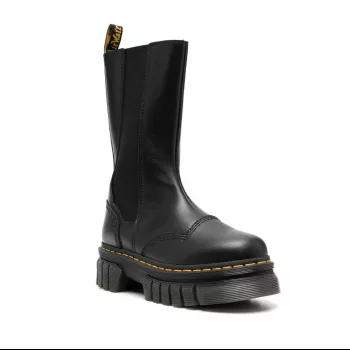
Casual styling: Soft leather pairs well with denim, knits, and sneakers, and it can dress up simple outfits when kept clean and conditioned. For a coordinated, everyday look, consider pairing the backpack with Dr. Martens Women’s Beige Slip-On Shoes for an easy, walkable outfit that still looks put-together.
| Need | What to look for | Why it helps |
|---|---|---|
| All-day comfort | Adjustable straps and balanced packing | Reduces shoulder strain and swinging |
| Fast access | Wide opening + small pockets | Finds essentials without unloading |
| Travel-ready | Secure pockets and easy-to-carry shape | Helps keep valuables closer and organized |
| Longer lifespan | Gentle cleaning + occasional conditioning | Maintains softness and surface finish |
Softness depends on how a leather is tanned and finished, but nappa leather is widely known for a very soft, smooth, pliable feel. Other leathers can be just as soft when cut thinner and conditioned properly.


Leave a comment