Natural Sandalwood Six-Claw Massage Comb with Gua Sha Edge: Scalp-to-Body Relief and Daily Care
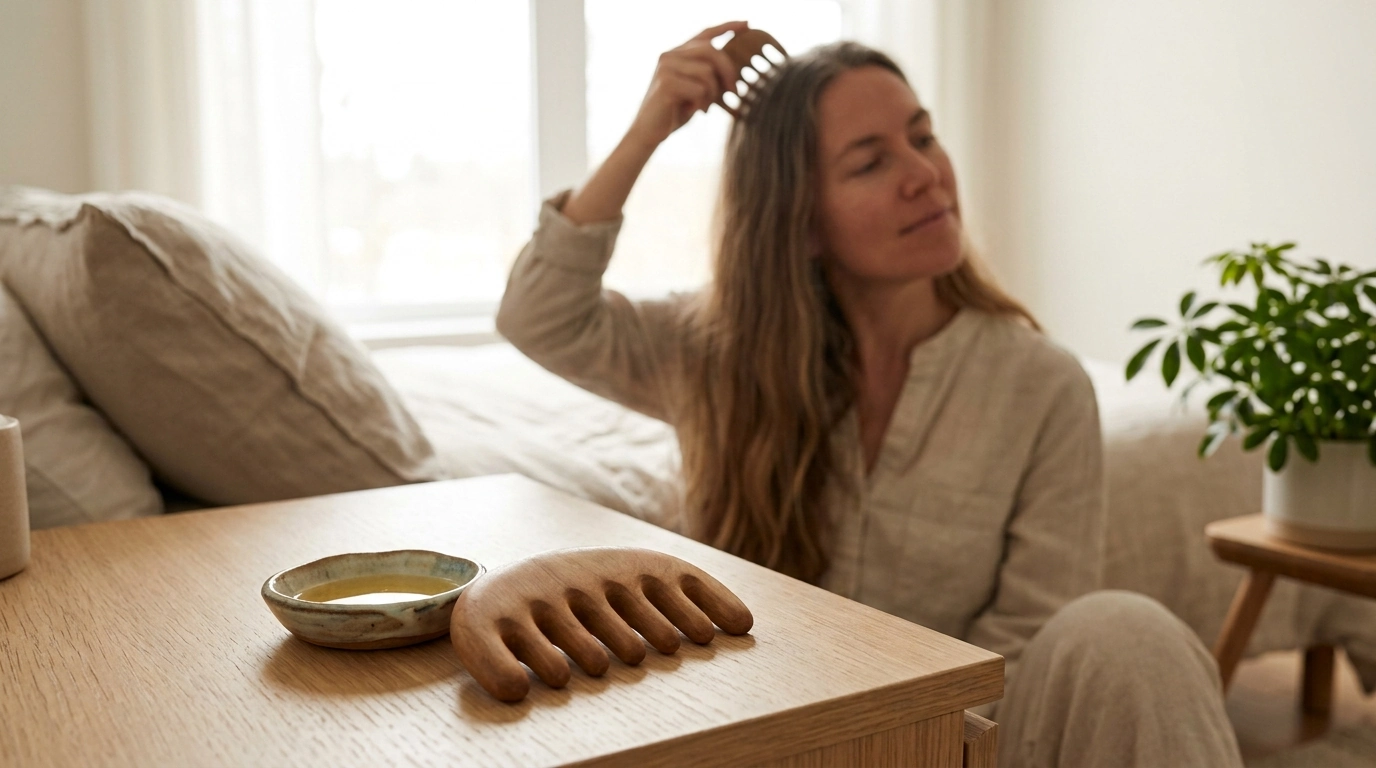
A small wooden tool can do more than detangle. This natural sandalwood six-claw massage comb is designed to stimulate the scalp, ease tension along the neck and shoulders, and provide a smooth gua sha-style edge for targeted pressure. Used for a few minutes a day, it supports a calmer routine for hair care and body comfort while staying gentle on skin and hair.
What this comb is designed to do
Unlike a standard comb that’s focused on brushing through lengths, a six-claw massage comb is built around how it feels against the scalp and along common tension lines in the body.
- Six rounded claws help distribute pressure across the scalp to reduce “hot spots” and create a more even massage.
- A smooth gua sha-style edge allows focused strokes along the neck, jawline, shoulders, arms, and legs.
- Sandalwood provides a naturally smooth feel in the hand and glides comfortably when used with light oil or lotion on the body.
- Compact size makes it easy to keep by the sofa, bedside, or desk for short reset breaks.
Massage can be a helpful way to support relaxation and day-to-day comfort when used appropriately. For general guidance on massage therapy, see the National Center for Complementary and Integrative Health (NCCIH).
Key features at a glance
- Material: natural sandalwood (wooden construction).
- Massage surface: six-claw head for scalp and broad muscle areas.
- Edge function: gua sha-style scraping edge for controlled pressure and directional strokes.
- Use cases: scalp massage, tension relief for neck/shoulders, body massage on limbs and back (as reachable).
Scalp claws vs. gua sha edge: when to use each
| Part of tool |
Best for |
How it feels |
Typical duration |
| Six-claw head |
Scalp stimulation, light pressure over larger areas |
Springy, diffused pressure |
1–3 minutes |
| Gua sha-style edge |
Neck/shoulders, jawline, forearms, calves; targeted tension points |
More focused, directional pressure |
30–90 seconds per area |
| Handle/curve (for grip) |
Control and leverage |
Stable, secure hold |
Throughout session |
How to use it on the scalp (daily routine)
A scalp massage should feel relieving, not scratchy or aggressive. Treat it like a quick daily reset rather than a deep “workout” for your scalp.
- Start on dry hair or lightly damp hair; avoid tugging by working in small sections.
- Place the six claws on the scalp and move in short, slow strokes from hairline toward crown; keep pressure comfortable.
- For tension relief: pause on tight areas and apply gentle micro-circles without scratching the skin.
- Limit to a few minutes to avoid over-stimulating sensitive scalps; stop if irritation occurs.
- If using hair oil/serum, apply sparingly so the tool glides without slipping excessively.
If scalp sensitivity, flaking, or irritation is a concern, it helps to keep hair-care basics in mind (like gentle handling and avoiding harsh friction). The American Academy of Dermatology Association offers practical hair and scalp care guidance.
How to use the gua sha edge on neck, shoulders, and body
The gua sha-style edge is meant for controlled, directional strokes—especially useful where tension tends to collect after long screen time or repetitive movement.
- Use a small amount of body oil or lotion for slip; avoid dry scraping on sensitive skin.
- Hold the edge at a shallow angle (about 10–30 degrees) and stroke in one direction with light to moderate pressure.
- Neck/shoulders: glide from the base of the skull down the side of the neck, then across the top of the shoulder toward the outer arm.
- Arms/legs: stroke toward the body with gentle pressure; keep movements slow and consistent.
- Avoid broken skin, inflamed acne, varicose veins, or areas with sharp pain; consult a clinician if unsure.
For many people, a simple pattern works well: 3–5 slow strokes per line, then move to the next area. The goal is a warm, eased feeling—not bruising or tenderness that lingers.
Care and storage for a sandalwood massage tool
Wooden tools can last a long time with basic care. Because sandalwood is naturally smooth, most upkeep is about keeping it clean and dry.
- Wipe after each use with a soft, slightly damp cloth; dry promptly to protect the wood.
- Avoid soaking or leaving in humid, wet areas for long periods; wood can warp or crack.
- If used with oils, occasionally clean with mild soap on a cloth, then wipe again with clean water and dry.
- Store in a dry drawer or pouch; keep away from direct heat sources and prolonged sunlight.
- If the surface feels dry over time, a tiny amount of food-grade mineral oil can be buffed in, then wiped clean.
Who it tends to work best for
- People who want a quick scalp massage without an electric device.
- Anyone dealing with desk-time tension who benefits from short neck/shoulder reset sessions.
- Those who prefer wood tools and a simpler routine over metal or stone options.
- Gift-friendly choice for self-care routines, travel kits, or post-workout recovery.
Product options in stock
If you want one tool that covers scalp stimulation and targeted body strokes, the option below fits a straightforward daily routine.
FAQ
What are the benefits of using a sandalwood comb on your hair?
A sandalwood comb can feel smooth against hair and scalp, and many people find wooden tools create less static than some plastic combs. Results vary by hair type and technique, so using light pressure and working in small sections helps keep detangling comfortable.
Recommended for you


Leave a comment