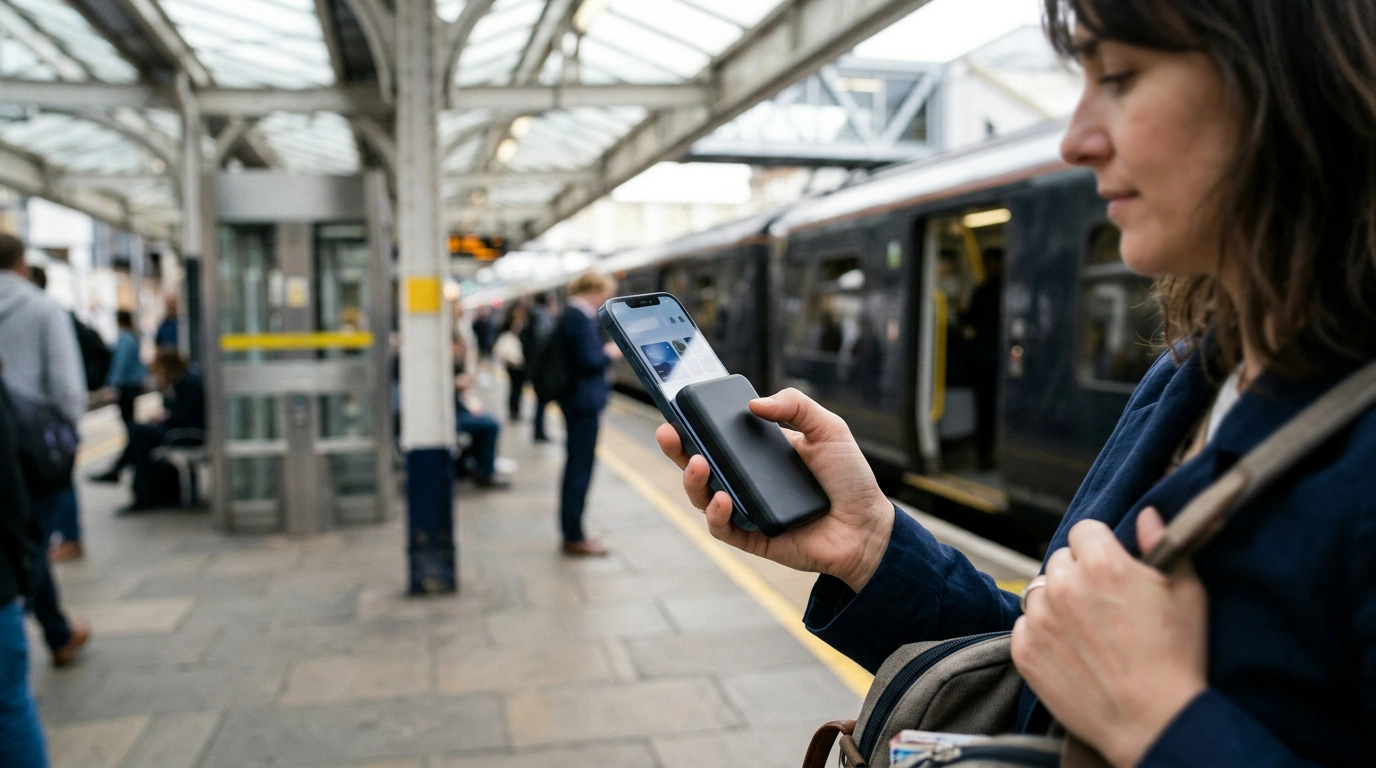
A magnetic portable charger keeps your phone topped up without juggling cables—handy for commutes, travel days, conferences, and long shifts. A 10000mAh model hits a practical middle ground: enough reserve power for meaningful top-ups, while still staying compact for everyday carry. Below is a clear breakdown of what this style of power bank does best, what to check before buying, and how to get reliable charging whether you go wireless or plug in.
What a 10000mAh magnetic portable charger is good for
- Quick top-ups between meetings, classes, or errands: snap it on and keep moving instead of hunting for an outlet.
- One-hand use while you multitask: magnets help keep the charger aligned while texting, scanning tickets, or navigating.
- Backup power on travel days: ideal when airport or venue outlets are scarce—or already taken.
- A smart size-to-capacity balance: 10000mAh is often easier to pocket than larger banks while still covering a busy day.
- Best results with magnetic-alignment phones/cases: non-magnetic devices may need an adapter ring for stable wireless charging, or simply use a cable.
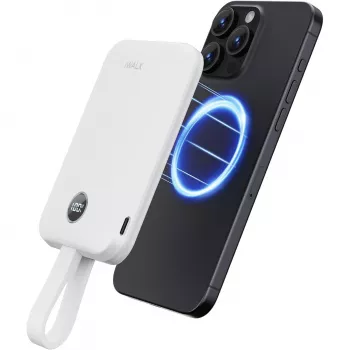
Product: Magnetic 10000mAh Portable Charger
Price: $34.51 (USD)
Availability: In stock
Best for: convenient snap-on charging during commutes, events, and trips
Good to confirm before purchase: device compatibility (magnetic alignment support), the wireless charging wattage your phone can accept, and whether your case thickness or finish affects the magnetic hold.
At-a-glance specs and buying checklist
- Capacity: 10000mAh is a strong everyday reserve, but real-world delivered power is lower due to voltage conversion and charging efficiency.
- Charging modes: magnetic wireless charging for convenience, plus wired output for higher efficiency and broader compatibility.
- Alignment and hold: stronger magnets improve stability; thick, textured, or slippery cases can reduce grip.
- Heat management: wireless charging can run warmer than wired—give it airflow and avoid covering the pack.
- Port selection: check for USB-C input/output and any additional USB-A port if older cables are in rotation.
- Pass-through charging: if supported, the power bank can charge your phone while it’s being recharged; confirm in product details if that matters for your setup.
Quick comparison: magnetic wireless vs wired charging
| Use case |
Magnetic wireless |
Wired (USB) |
| Walking around while charging |
Convenient; stays attached if magnet alignment is supported |
Cable can snag; less tidy |
| Charging speed |
Depends on wireless wattage and alignment; usually slower than wired |
Typically faster and more efficient |
| Heat |
Often warmer |
Usually cooler |
| Compatibility |
Best with magnetic-alignment phones/cases; others may need an adapter ring |
Works with most devices using the right cable |
| Best time to use |
Quick top-ups, light use while moving |
Longer charges, tablets, or when speed matters |
How many charges can 10000mAh provide?
Battery capacity is measured at the power bank’s internal cell voltage, not the voltage your phone battery uses. After conversion losses (and additional losses for wireless charging), the usable energy delivered to your phone is lower than the headline number suggests.
- Wireless usually yields fewer full recharges than wired: energy is lost as heat and through the inductive charging process.
- Phone battery size matters: smaller phones can see more recharges; larger phones may get fewer full refills.
- Realistic expectation: think “several meaningful top-ups across a day or two,” rather than a guaranteed number of complete 0–100% fills.
For background on how wireless charging works (and why alignment matters), the Apple Support overview of wireless charging is a helpful reference, and the Wireless Power Consortium (Qi) provides standards information.
Compatibility notes: phones, cases, and magnetic alignment
- Best fit: phones that support magnetic alignment and cases built to match it tend to charge more consistently and hold more securely.
- Case pitfalls: thick cases, wallet attachments, or metal plates can weaken the magnetic hold or interfere with wireless charging performance.
- Non-magnetic phones: a magnetic ring accessory can improve positioning for wireless charging, or you can use wired output for the most consistent results.
- Stability tip: center the charger carefully and avoid aggressive movement if you notice the connection dropping during wireless charging.
Everyday use tips for more reliable charging
Care, safety, and travel guidance
- Recharge responsibly: use reputable cables and wall chargers, and avoid damaged cords or loose ports.
- Storage: don’t leave a power bank in high heat (like a car dashboard) or extreme cold for extended periods.
- Stop using if compromised: if the pack becomes swollen, unusually hot, or visibly damaged, discontinue use and follow local battery recycling rules.
- Flying with a power bank: keep it in carry-on baggage and follow airline rules for lithium-ion batteries. The FAA’s PackSafe batteries guidance is a reliable starting point.
Other in-stock picks
FAQ
Will a magnetic portable charger work with any phone?
It can charge many phones, but the magnetic snap-on hold works best with phones and cases designed for magnetic alignment. If your phone doesn’t support that alignment, you can add a magnetic ring accessory for positioning or use a cable for universal compatibility.
Is 10000mAh enough for a weekend trip?
For moderate use, it often covers multiple top-ups across 1–2 days, but usable capacity is lower than the label due to efficiency losses. Heavy use like navigation, camera, or hotspot can drain faster, so wired charging (or recharging the bank sooner) may be helpful.
Why does wireless charging feel slower or warmer than wired charging?
Wireless charging is less efficient, and any misalignment increases energy loss—often felt as warmth. Wired charging typically delivers power more efficiently, so it tends to be faster and run cooler.
Recommended for you




Leave a comment