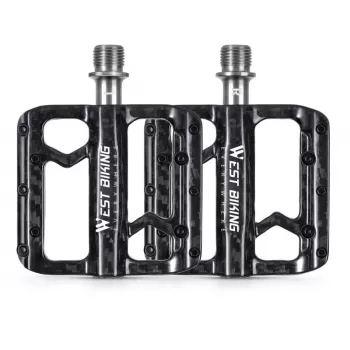
Flat pedals are often chosen for one reason: confidence. A wide, grippy platform lets you reposition your foot mid-ride, dab quickly in technical spots, and pedal in everything from trail shoes to everyday sneakers. This pedal design pairs a carbon fiber body with a titanium shaft and a sealed three-bearing system to deliver stable footing, smooth rotation, and long-term durability for trail, enduro, gravel, and daily riding. For more guidance, see Bike test: Expedition tourers.
If you’re weighing an upgrade, the details below break down how the materials, bearing layout, traction behavior, and setup practices translate to real-world feel—especially when conditions turn wet, dusty, or muddy. For further reading, see The Ultimate Guide To Pedals – eBikes.org.
| Feature | What it means on the ride | Who benefits most |
|---|---|---|
| Carbon fiber body | Firm platform feel; reduced bulk | Riders prioritizing efficiency and weight |
| Titanium shaft | Resists bending and rust; longer lifespan under hard use | Heavier riders, wet-weather riders, frequent trail use |
| Sealed bearings (3) | Smoother spin and better protection from grit and water | All-season riders, muddy conditions |
| Flat platform | Easy to dab, reposition, or ride in regular shoes | Beginners, technical trails, urban riding |
A carbon fiber pedal body is all about stiffness without unnecessary weight. Underfoot, that stiffness can feel very “direct”—especially when sprinting, driving through corners, or landing small drops. Instead of absorbing energy through flex, the platform tends to feel supportive and immediate.
The titanium shaft is the other half of the durability story. Titanium is valued for strength-to-weight and corrosion resistance, which matters when pedals see constant moisture, road salt, creek crossings, or muddy wash-downs. Over long ownership, a corrosion-resistant axle can also reduce the chance of threads seizing in the crank—particularly for riders who don’t remove pedals often.
That said, carbon fiber strength is more sensitive to sharp impacts than many metals. Pedal strikes happen in real life: rock gardens, rooty climbs, and awkward off-camber turns. What helps most is solid edge shaping, quality hardware, and the ability to replace pins if the pedal takes hits. It’s also smart to periodically inspect the body for chips or cracks after a hard strike, just as you would with carbon bars or rims.
Finally, traction isn’t created by “flex” in the body. Carbon platforms rely on platform shape and pin placement to bite into your shoe’s rubber, so shoe tread and pin contact matter more than ever.
Pedal bearings live in a punishing spot: they face spray from the front wheel, dust kicked up from the rear, and repeated side loads when you’re weighting the outside pedal. A sealed bearing system is designed to keep grit and water away from rolling surfaces, reducing roughness and play over time.
Using multiple bearings can improve support across the axle, helping the pedal feel stable when you push hard—think sprinting out of a corner, climbing out of the saddle, or dropping heels on rough descents. Riders often describe the result as a smoother spin with less slop developing as miles stack up.
Watch for service cues: side-to-side wiggle, gritty rotation, clicking under load, or visibly damaged seals. Also avoid pressure-washing at close range; high-pressure water can bypass seals and strip grease even on well-sealed components.
Flat pedals work as a system: platform size, concavity, and pin pattern all interact with shoe rubber. A supportive, slightly concave platform tends to “cup” the shoe, improving planted feel on long descents. Pin pattern matters just as much—well-placed pins stabilize the forefoot and keep the shoe from rocking during hard efforts.
For aggressive trail use, pair these pedals with shoes that have sticky rubber and a supportive midsole. Sticky rubber increases grip, while midsole support reduces foot fatigue on long rides and helps prevent hot spots when you’re standing over choppy terrain.
If pins are replaceable, keep a few spares on hand. Bent or missing pins don’t just reduce grip—they can change how your foot sits on the platform, which affects knee tracking and overall stability. And if you’re new to metal pins, start with moderate pin height to reduce shin strikes while you refine foot placement.
Most modern adult cranks use the standard 9/16″ pedal thread, but it’s still worth confirming if you’re building an older bike, a vintage crankset, or a smaller youth bike. The left pedal is reverse-threaded (left-hand thread), which is normal and helps prevent loosening while riding.
The “best” flat pedals depend on your terrain, shoe choice, and how much maintenance you’re willing to do. Top options typically stand out for stable platform shape, reliable sealing, and pins that are easy to replace—so it’s usually smarter to match features to your riding than to chase a single brand name.






Leave a comment