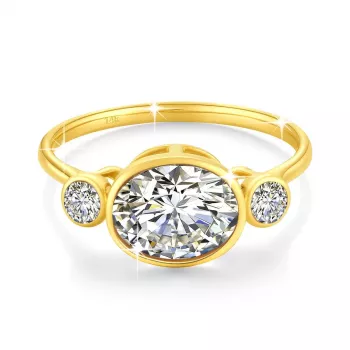
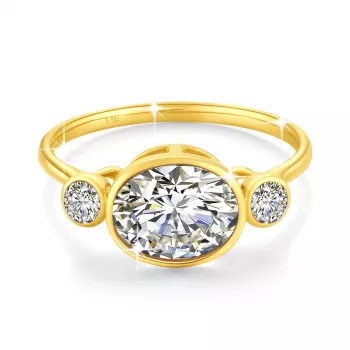
An oval-cut moissanite ring blends an elongated silhouette with bright, fiery sparkle—often delivering a high-end look in durable, everyday-friendly materials. If you’re considering a 2-carat oval moissanite set in 14K real gold, the details that matter most are how the shape wears on the hand, how the setting sits against daily life, and what “value” really means once metal purity and craftsmanship are factored in.
Oval stones have a reputation for looking elegant on a wide range of hands. The longer outline visually elongates the finger, creating a slimmer appearance that many people love for an engagement or wedding ring.
Moissanite’s faceting can look especially lively in an oval because the shape tends to throw strong brilliance and colorful “fire.” (For an overview of moissanite properties, see the GIA Gem Encyclopedia entry on moissanite.)
A 2ct oval “face-up” presence often appears larger than some round stones of the same carat weight because ovals typically spread more across the finger. And since moissanite is known for daily-wear resilience, it’s a practical choice for a ring that won’t spend its life in a jewelry box.
A 2ct-look oval center stone reads bold without automatically tipping into “costume” territory for most hands—especially when balanced with a thoughtfully chosen band width and setting height. Pairing that statement center with 14K real gold adds a classic fine-jewelry feel while keeping durability in mind for everyday wear.
14K gold is widely chosen for rings meant to be worn daily because it typically strikes a strong balance of rich color and sturdiness. If you want a quick refresher on gold purity and karats, the World Gold Council’s guide to gold jewelry karats is a helpful reference.
| Detail | What to expect |
|---|---|
| Center stone | Oval-cut moissanite (2ct look) |
| Metal | 14K real gold |
| Use | Wedding, engagement, anniversary, everyday fine jewelry |
| Overall vibe | Classic center-stone sparkle with modern practicality |
Not all ovals look the same once they’re on your finger. A few subtle proportions can dramatically change the overall vibe.
A slightly elongated oval looks sleek and contemporary, while a wider oval can read softer and more traditional. If you’re deciding between two similar rings, this ratio is often the difference between “modern” and “classic” at first glance.
Many oval stones show a faint shadow across the center (the bow-tie). It’s common and not automatically a flaw; what matters is how noticeable it is in normal indoor lighting. Well-cut ovals tend to keep the bow-tie subtle, so the center still looks bright rather than shaded.
Lower profiles are usually easier for daily life—less snagging on sweaters, fewer bumps against countertops, and a smoother fit with gloves. Higher profiles can increase light entry and visual drama, but they may catch more often if you’re hard on your hands.
A thinner band emphasizes the center stone and can make a 2ct look feel even larger. A slightly wider band can feel more balanced and substantial, especially if you prefer the ring to look “anchored” on the finger rather than top-heavy.
Choosing 14K gold is often about realism: rings get knocked around. Compared with higher-karat gold, 14K is commonly sturdier due to its alloy mix, while still offering that unmistakable fine-gold finish.
Comfort and wearability also depend on your skin and lifestyle. Gold is generally well-tolerated, but sensitivities can be influenced by the specific alloy components used to strengthen it. If you’re prone to reactions, it’s worth asking what’s in the alloy before committing.
For standards around jewelry descriptions and metal claims, the FTC Guides for the Jewelry, Precious Metals, and Pewter Industries provide useful context.
Even a beautiful ring can become frustrating if the fit is off. For the best results, confirm your ring size with a local jeweler or a reliable at-home sizing method, and measure when your fingers are neither cold nor swollen.
If available, a comfort-fit interior (slightly rounded on the inside) can feel smoother for all-day wear. Also consider your stacking plan: if you want a wedding band to sit flush, make sure the setting style allows it; otherwise, a contour band may create a cleaner look and prevent gaps.
Pricing varies by stone size and cut quality, the type of metal (14K vs. 18K), and how complex the setting is. Moissanite is typically more affordable than a similar-looking diamond, while 14K real gold generally costs more than silver or plated metals due to material value and durability.



Leave a comment