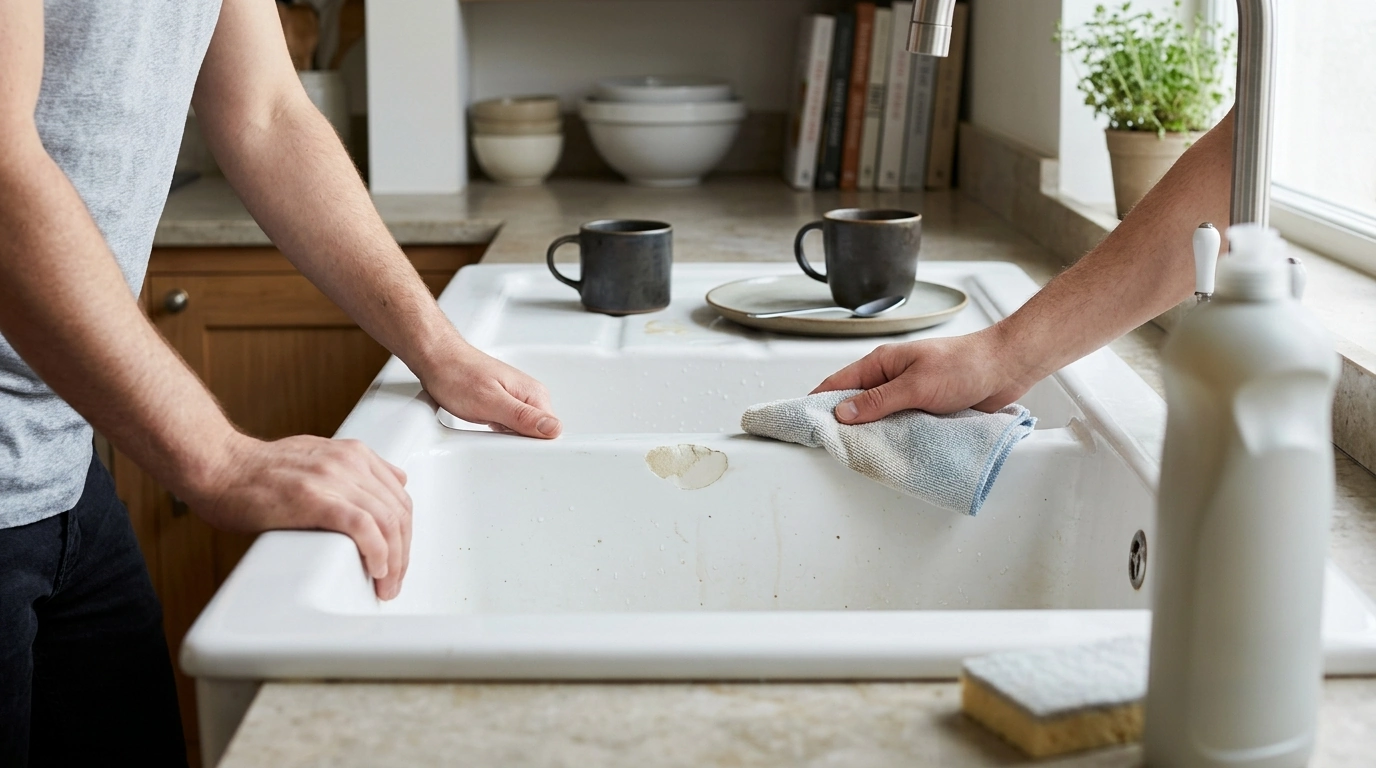
Ceramic sinks are popular for their glossy finish and classic look, but they aren’t perfect for every bathroom. The biggest downsides usually come down to durability under impact, weight, and maintenance habits.
Ceramic is hard, but it’s also brittle. Dropping a metal hair tool, a glass bottle, or even a heavy faucet part into the basin can chip the glaze or cause a crack. Small chips can be mostly cosmetic, but deeper damage may expose the underlying material and make staining easier.
Minor chips can sometimes be filled, but the repair may not match the original sheen and color perfectly. If the damage spreads or a crack compromises the basin, replacement is often the cleaner long-term fix.
Ceramic sinks tend to weigh more than acrylic, thin stainless steel, or some solid-surface options. That extra weight can matter for wall-mounted installations or furniture-style vanities, where proper support and correct mounting hardware are critical.
Depending on the glaze and color, ceramic can show hard-water spots, soap film, and light scuffing from abrasive items. Matte finishes may highlight mineral deposits faster, while glossy finishes can reveal water spotting under bright lighting.
While ceramic is generally easy to wipe down, harsh scouring powders, rough pads, and some acidic cleaners can gradually wear the glaze, leaving it less shiny and more prone to visible residue.
For a deeper look at choosing the right ceramic basin and keeping it looking new, visit the full guide here: ceramic oval countertop bathroom sink buying and care guide.
For Ceramic Sink Downsides: Chips, Weight, and Care, the best answer depends on fit, material, care instructions, and how the product will be used day to day.
Most clean up easily with mild soap and a soft cloth, but they can show water spots and soap film if your water is hard. Avoid abrasive pads to help preserve the glaze.






Leave a comment