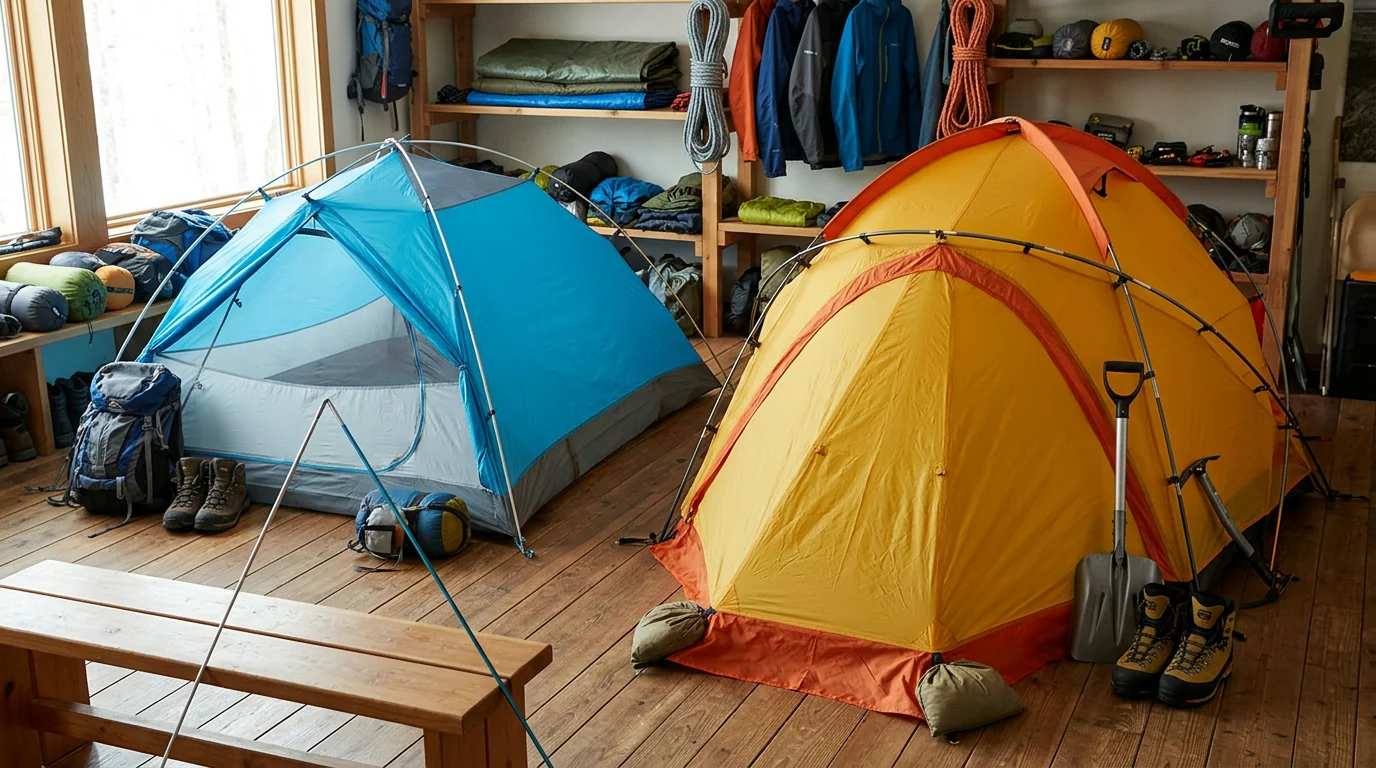
A true 4-season tent is built to stay stable and protective in winter-alpine conditions: strong winds, heavy snowfall, spindrift, and sustained cold. A 3-season tent is designed for spring through fall comfort—great ventilation, lighter materials, and weather protection aimed at rain and moderate wind rather than snow loading.
The biggest difference is structural strength. Four-season models typically use more robust poles (often with additional crossing points) and a geometry that sheds wind and snow. Fabric choices also lean heavier and more abrasion-resistant, with a full-coverage rainfly and fewer mesh panels to block blowing snow and retain warmth.
Ventilation is still important, but it’s controlled. Instead of large mesh walls that feel airy in summer, 4-season tents rely on closable vents and solid inner panels to reduce drafts and prevent spindrift from entering. Many also feature reinforced guy-out points and stronger stake loops so the tent can be anchored securely when conditions get rowdy.
Three-season tents prioritize airflow and low weight. More mesh in the inner tent improves comfort in warm weather and reduces condensation in mild conditions. Pole structures are typically lighter and may not be intended for repeated snow loading or sustained high winds. They can handle storms, but they’re not built for the specific hazards of winter travel.
If trips include shoulder-season storms, exposed camps, or any chance of sleeping through snowfall, a 4-season design offers a safety margin that matters. If most nights are above freezing and you value packability and ventilation, a 3-season tent is often the better fit. For a closer look at a lightweight, waterproof, double-layer 2-person option and the features that matter, visit this 4-season tent guide.
Sometimes, but only in mild winter conditions and sheltered camps. If heavy snow, strong winds, or blowing spindrift are possible, a true 4-season tent is the safer choice.






Leave a comment