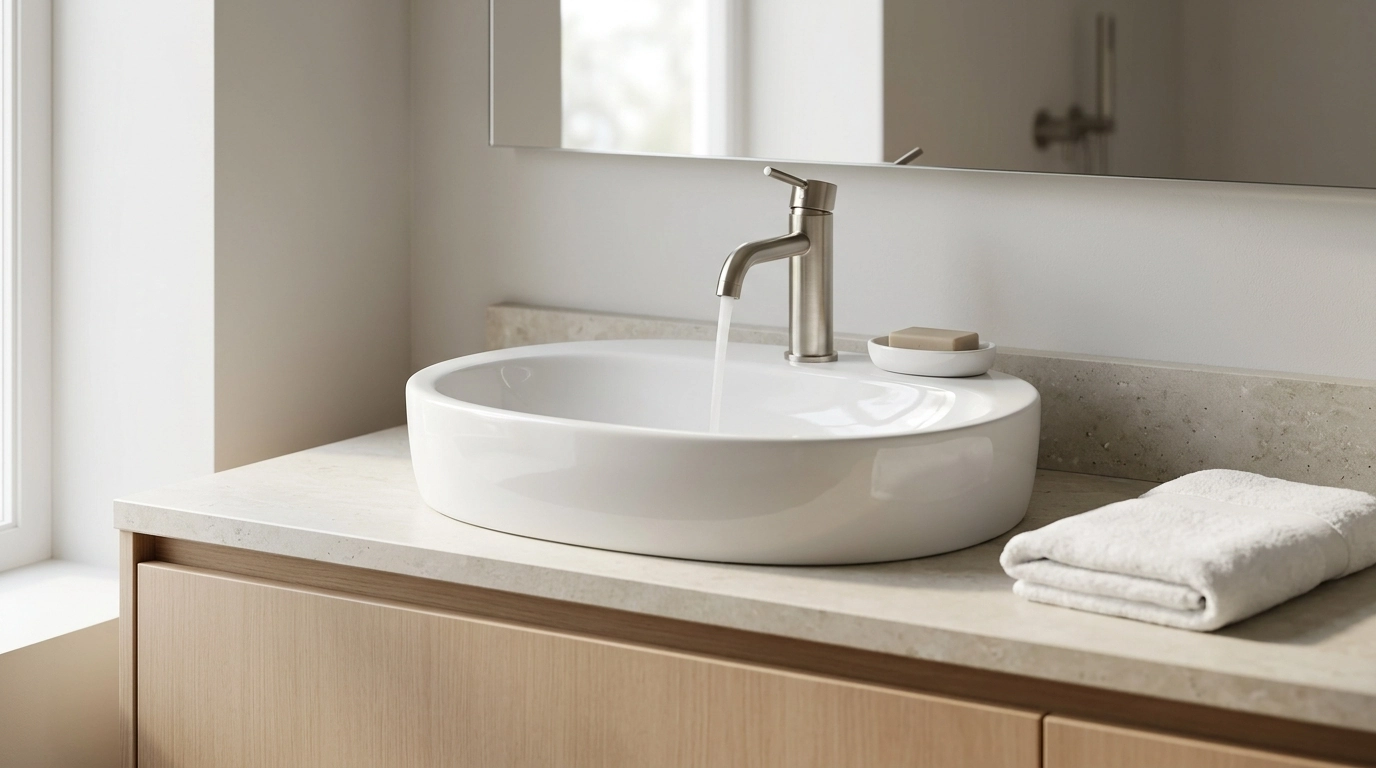
A ceramic oval countertop sink brings a soft, balanced shape to a vanity while keeping maintenance straightforward. The oval silhouette feels lighter than sharp-edged designs, and glazed ceramic is a familiar, bathroom-ready material that holds up well to daily handwashing, toothpaste splatter, and makeup routines. Below you’ll find practical guidance on glaze and finish, faucet and countertop pairing, installation basics, cleaning habits that protect the surface, and how ceramic compares to other popular vessel-sink materials.
Why an Oval Countertop Sink Works in Real Bathrooms
Oval vessel sinks tend to “fit” real-life bathrooms because the shape is visually calm and physically easy to live with.
- Fewer sharp corners to chase: The soft curve reduces tight angles where residue gathers, which can make wipe-downs faster.
- A focal point without heaviness: Countertop placement creates presence on the vanity, even when the cabinet is compact.
- Works across styles: The silhouette reads modern or transitional depending on the faucet and hardware finish you pair with it.
- Defines the wet zone: On wider countertops—especially shared baths—the vessel bowl makes it clear where splashes should land.
Ceramic as a Sink Material: What to Expect
Ceramic remains a go-to for bathrooms because the surface can be glossy, clean-looking, and resistant to typical staining—when the glaze is intact and cared for properly.
- Non-porous feel (with intact glaze): Glazed ceramic is generally resistant to staining from soap, cosmetics, and everyday splashes.
- Comfortable heat tolerance: Warm water is no issue, but avoid sudden thermal shock (for example, dumping very hot water immediately after very cold water).
- Hard finish, not impact-proof: Ceramic can chip if struck by heavy objects, so careful handling during installation matters.
- Stable color over time: Ceramic tends to keep its brightness better than many coated surfaces, helping the sink look “new” longer.
Fit and Compatibility Checklist Before Buying
Most countertop sink disappointments come down to fit: faucet height, spout reach, and drain alignment. A quick checklist can prevent returns and rework.
- Countertop cutout: Many vessel sinks only need a drain opening, but confirm the exact requirement before drilling stone, quartz, or laminate.
- Faucet style: Choose a tall vessel faucet or a wall-mount faucet. The spout reach should land water near the center of the bowl to reduce splash.
- Drain type: Vessel sinks often use a standard bathroom drain opening; verify sizing and whether the sink includes (or requires) an overflow-compatible drain.
- Vanity height: Because a vessel sits above the counter, total “rim height” increases—factor in comfort and mirror placement.
- Clearances: Leave enough space behind the sink for handles and enough side room for soap dispensers and daily use.
For general spacing and planning guidance, the National Kitchen & Bath Association (NKBA) is a helpful reference point when you’re laying out a bathroom.
Material Comparison for Countertop Bathroom Sinks
If ceramic isn’t the only option on your list, it helps to compare materials based on surface traits and upkeep expectations rather than looks alone.
Common Countertop Sink Materials at a Glance
| Material |
Surface traits |
Upkeep level |
Best for |
| Glazed ceramic |
Smooth, glossy, stain resistant when glaze is intact |
Low |
Everyday bathrooms, bright clean look |
| Stone resin / solid surface |
Matte to satin, can feel less “cold” visually |
Low to medium |
Modern designs, softer look |
| Tempered glass |
Transparent or tinted, shows water spots easily |
Medium |
Statement vanities, guest baths |
| Natural stone |
Unique veining, porous unless sealed |
Medium to high |
Luxury aesthetics, custom builds |
Installation Notes That Prevent Leaks and Chips
Countertop sinks are straightforward, but a few habits make the difference between a confident install and a frustrating drip or hairline chip.
- Dry-fit first: Confirm the sink sits flat and stable before applying any sealant.
- Use the right sealant: A continuous bead of bathroom-rated silicone under the base helps stop water from creeping underneath.
- Avoid over-tightening: Drain hardware should be snug, not forced, to reduce stress on the ceramic.
- Plan the trap alignment: Vessel height can change tailpiece length; make sure the P-trap lines up without awkward angles.
- Protect the finish during install: Set the sink on a towel, and keep tools away from the rim and glaze.
Cleaning and Care for a Glossy Ceramic Finish
Glazed ceramic stays bright when you keep residue from building up. The goal is frequent light cleaning rather than occasional heavy scrubbing.
- Daily: Rinse and wipe with a soft cloth to prevent soap film and hard-water spotting.
- Weekly: Use a mild, non-abrasive cleaner; skip scouring powders that can gradually dull the gloss.
- Hard-water areas: Use a gentle descaling approach intended for glazed bathroom fixtures, then rinse thoroughly so no product remains on the surface.
- Prevent chips: Avoid dropping metal grooming tools into the bowl; if you’re concerned, a sink grid can add peace of mind.
- Be careful with harsh chemicals: Strong acids and abrasive pads can damage finishes over time unless the product guidance specifically allows them.
For general household hygiene routines (and how to approach cleaning safely), the CDC’s cleaning guidance is a solid reference. If you’re also updating fixtures for efficiency, EPA WaterSense is useful when choosing water-saving faucets to pair with a vessel sink.
If you want the oval vessel look in a material that feels familiar and easy to live with, this option is built around the practical strengths of glazed ceramic.
Ceramic Oval Countertop Bathroom Sink
More In-Stock Picks
FAQ
Is ceramic good for a bathroom countertop?
Yes—glazed ceramic is widely used in bathrooms because it’s easy to clean and resists many common stains when the glaze remains intact. The main caution is impact: avoid dropping heavy items into the bowl and skip abrasive cleaners that can dull the surface.
Recommended for you





Leave a comment